Is Creatine Safe for Kidneys?
For healthy adults, research on standard creatine monohydrate use has generally been reassuring. One important wrinkle: creatine can affect blood creatinine, a marker clinicians use when assessing kidney function. A higher result does not automatically mean kidney damage, but it should never be ignored or self-diagnosed.
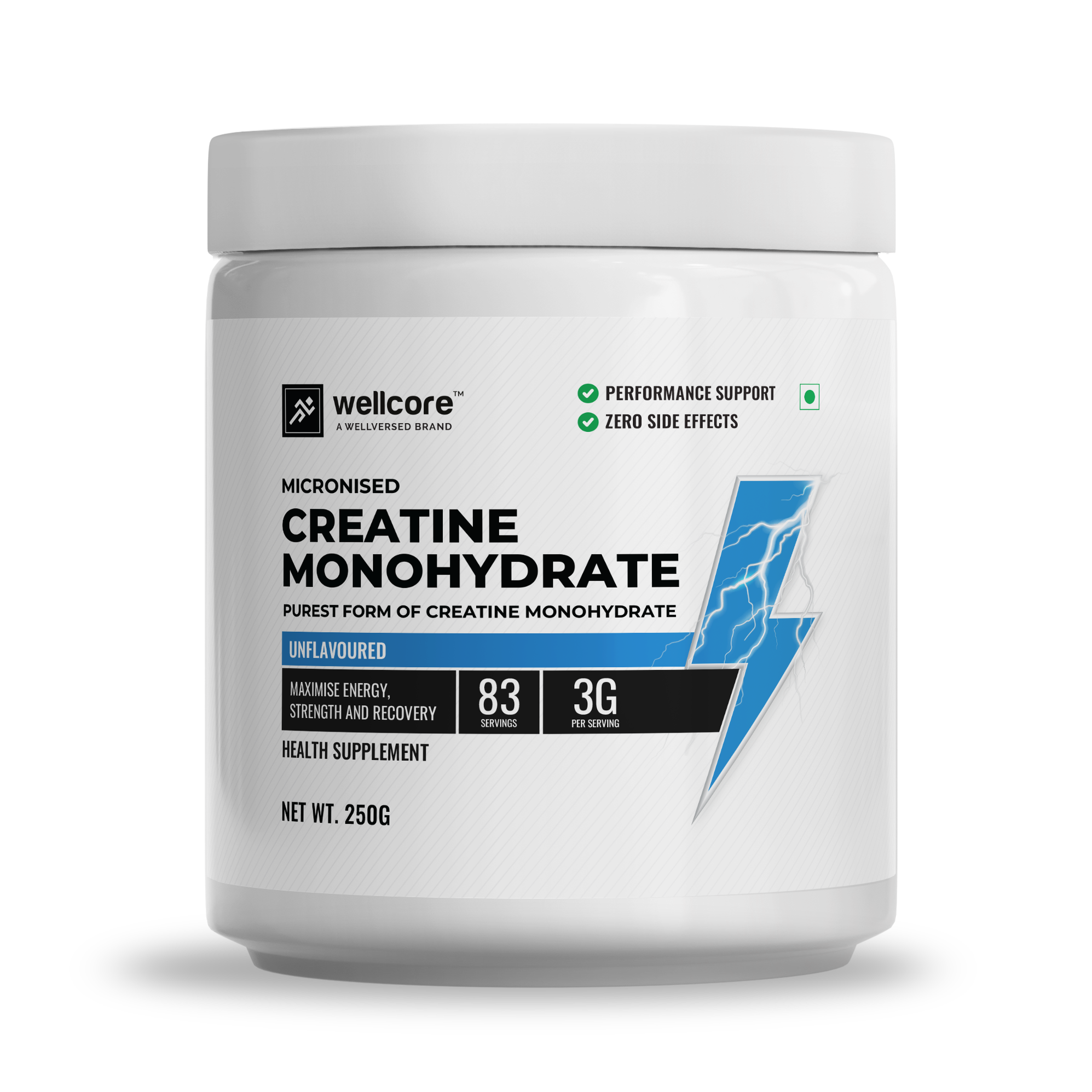
Product example · Check the label
Compare Wellcore Creatine
If you're comparing creatine products, review the ingredient list, serving size, seller and current listing details. This product example is not a medical recommendation, and taking a supplement is optional.
Does creatine hurt your kidneys?
Current research does not show convincing evidence that standard creatine monohydrate supplementation harms kidney function in otherwise healthy adults. This is not the same as proving that every dose, product, combination, or individual situation is risk-free. The quality of the evidence depends on who was studied, how much was taken, how long use continued, and which kidney measures were checked.
Creatine is a compound your body makes and stores mainly in muscle. It is also found in foods such as meat and seafood. Creatine supplements increase the body's creatine stores; some creatine is naturally converted into creatinine, which enters the bloodstream and is removed largely through the kidneys.
That connection explains why creatine and kidney health are often discussed together. It also explains why the interpretation of a blood test matters.
What does research say about creatine and kidney function?
A 2025 systematic review and meta-analysis in BMC Nephrology found a small increase in serum creatinine after supplementation, but no statistically significant difference in glomerular filtration rate (GFR). A 2026 systematic review of randomized trials also found higher creatinine and lower GFR estimates when GFR was calculated from creatinine, while not finding significant differences in GFR measured with a creatinine-independent method (Cr-EDTA) or in several other kidney markers. These results highlight why creatinine-based estimates can be difficult to interpret during supplementation and why more research is still needed, particularly for people with existing kidney disease.
Still, research has limitations. Studies differ in size and duration, and evidence from healthy adults cannot be assumed to apply to people with chronic kidney disease or other complex medical conditions. A supplement may also be combined with other products, medicines, extreme training, dehydration, or very high doses, making it harder to identify what caused a problem.
So, is creatine harmful for kidneys? The most balanced answer is that standard creatine monohydrate use has not been shown to damage healthy kidneys in the available research, but individual medical circumstances matter. Avoid using broad online claims as a substitute for medical assessment.
Does creatine monohydrate increase creatinine?
It can. Creatinine is a normal breakdown product related to creatine metabolism. When you take a creatine supplement, the amount of creatinine measured in your blood may increase in some circumstances. That can affect estimates of kidney function that use blood creatinine as one of their inputs.
Creatinine is useful, but it is not a perfect stand-alone measurement of kidney health. Results can also be affected by muscle mass, recent hard exercise, diet, certain medicines, and other factors. A creatinine result outside the reference range deserves proper interpretation rather than an assumption that the supplement is either definitely responsible or definitely harmless.
Will creatine supplements raise creatinine levels?
Possibly, yes. But a rise in serum creatinine does not automatically prove that the kidneys are being damaged. Equally, it is not safe to dismiss an abnormal result as “just creatine.” Tell the clinician who orders or reviews your test that you use creatine, including the product, amount and how long you have taken it.
What if a blood test shows high creatinine?
- Share your supplement label and your usual dose with the clinician.
- Tell them about other supplements, medicines, recent intense exercise and relevant symptoms.
- Do not change prescribed medicine or ignore follow-up testing without medical advice.
- Ask whether repeat testing or a different measure of kidney function is appropriate for your situation.
Depending on the context, a clinician may consider other information such as urine tests, trends over time, or a kidney-function estimate less dependent on creatinine. The appropriate choice is individual, so do not order or interpret tests based only on an online article.
Before you buy · Review the product
Check the product details first
Use the product label and seller listing to verify ingredients and serving information. If you have kidney disease or abnormal kidney tests, get individual medical advice before using creatine.
What does creatine do to your kidneys?
Creatine is not a kidney “cleanser” or treatment. Its best-known role is helping replenish phosphocreatine stores in muscle, which supports quick energy during repeated short, high-intensity efforts. The kidneys are involved in removing creatinine, a breakdown product, but that does not mean creatine automatically harms them.
In healthy people, the research to date has generally not found clinically meaningful kidney impairment from standard creatine monohydrate supplementation. That conclusion should not be stretched into a promise that creatine is appropriate for everyone or that unusually high doses are better.
Who should be more cautious?
Speak with a qualified healthcare professional before starting creatine if any of the following apply:
- You have diagnosed chronic kidney disease, reduced kidney function, or a history of kidney injury.
- You have unexplained abnormal creatinine results, protein in your urine, or are being investigated for a kidney problem.
- You have diabetes, high blood pressure, or another condition that can affect kidney health.
- You take prescription medicines or other supplements that may affect kidney function, fluid balance, or blood-test results.
- You are pregnant, under 18, or have a medical condition that makes supplement decisions more complex.
These are reasons to get individual advice, not proof that creatine will harm you. Your clinician can weigh your health history, the reason you want to use creatine, and the evidence relevant to you.
How to approach creatine more cautiously
Choose a clearly labelled product
If a healthcare professional agrees that creatine is appropriate for you, prefer a product that clearly identifies its ingredients and serving size. Creatine monohydrate is the form most studied. A premium brand name or an attractive label is not proof of purity, effectiveness or medical suitability.
Do not assume more is better
Follow the product label and qualified advice rather than experimenting with very large doses. Some published protocols use a loading phase, but loading is not essential for everyone. Taking more than you need can add cost and may increase digestive discomfort without making the supplement appropriate for your health situation.
Stay normally hydrated
Drink fluids in line with your thirst, activity, heat and any medical advice you have received. You do not need to force excessive amounts of water just because you take creatine. People with kidney or heart conditions may have specific fluid instructions, which should take priority over generic fitness advice.
Tell your clinician before testing
Make creatine use part of your medication and supplement history, especially before kidney-related blood or urine tests. Do not stop or start supplements solely to manipulate a lab result without asking the clinician responsible for your care.
Is creatine bad for kidneys if you take it every day?
Daily use is common in research and in sports nutrition practice, but whether it is appropriate depends on the person, dose and product. For healthy adults, evidence on usual creatine monohydrate use is generally reassuring. For anyone with kidney disease, unexplained abnormal tests, or relevant medicines, daily use should be discussed with a clinician first.
There is no need to take creatine just because it is popular. If the possible benefit is small for your goals, skipping it is a reasonable option. Training, sleep, food quality and consistency remain important.
Does creatine affect kidneys more when mixed with other supplements?
There is no simple rule that mixing supplements automatically damages kidneys, but multi-ingredient products can make it harder to know exactly what you are taking. Check each ingredient and avoid stacking products with overlapping stimulants or unclear quantities. If you have a health condition or use medication, show the full label to a qualified professional.
Do not assume that a symptom or abnormal test is caused by creatine alone. A clinician can consider other explanations, including illness, medication effects, strenuous exercise and other supplements.
Related product guide
Explore Wellcore Creatine
This is an example of a creatine monohydrate product. Compare labels carefully, avoid assuming a brand is right for everyone, and discuss supplements with your clinician if you have kidney-related concerns.
Frequently asked questions
Is creatine safe on kidneys for healthy adults?
Research on standard creatine monohydrate use in healthy adults has generally been reassuring, with no convincing evidence of kidney damage. This does not establish safety for every person or every dose.
Does creatine mess up your kidneys?
Current evidence does not show that usual creatine monohydrate supplementation damages healthy kidneys. People with kidney disease or abnormal kidney tests should get individual medical advice first.
Does creatine monohydrate affect kidneys or just creatinine?
Creatine may affect measured blood creatinine in some circumstances. Creatinine is used to estimate kidney function, but a change in that marker alone does not prove kidney damage. A clinician should interpret the complete picture.
Why do people say creatine is bad for kidneys?
Some concerns come from case reports, misunderstanding creatinine tests, and assuming that a change in a lab marker proves injury. Research in healthy people has generally been reassuring, but caution remains sensible for people with existing kidney problems.
Should I stop creatine before a kidney blood test?
Ask the clinician who ordered the test. Tell them what you take and follow their instructions; do not change your supplement routine simply to alter a result without guidance.
Can I take creatine if I have kidney disease?
Do not start it without advice from your treating healthcare professional. People with kidney disease need individual guidance because the evidence may not apply to their condition.
Related Creatine Guides
Creatine Safety and Side Effects
A broader guide to common concerns, risks and precautions.
Read side effects guide →Is Wellcore Creatine Safe?
Review general evidence and product-specific buying checks.
Read the safety guide →Creatine Basics
Learn what creatine does, how people use it and what to expect.
Read the beginner guide →This article is for general education, not diagnosis or treatment. It does not replace advice from your doctor or other qualified healthcare professional. If you have kidney disease, abnormal test results, or concerning symptoms, seek individual medical advice. Creatine products and labels may change.