Wellcore Creatine for a 16-Year-Old: Is It Safe?
If you searched “wellcore creatine 16 year old”, you may be wondering whether a teenager can take this supplement to build muscle or improve gym performance. The related questions “wellcore creatine is safe for 16 year old” and “is wellcore creatine good for 16 year old” need a cautious answer: don't start it on your own. The important question is not just whether creatine is studied in adults. It is whether a 16-year-old needs it, whether the evidence applies to teenagers, and whether a parent or qualified healthcare professional should be involved.
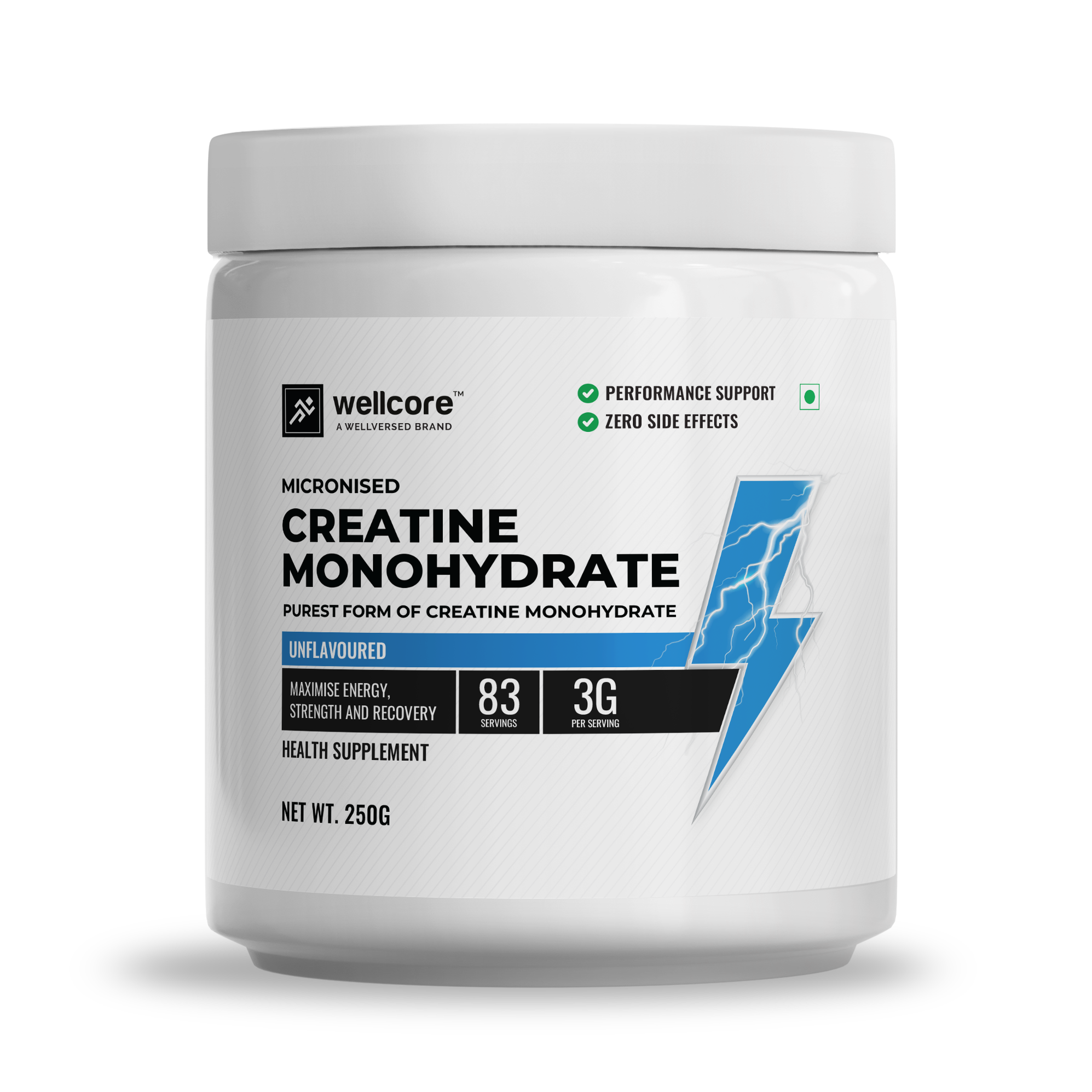
Product packaging does not establish that a supplement is suitable for a teenager. This image is for identification only, not a recommendation to buy or use it.
Do not self-prescribe a sports supplement. Involve a parent or guardian and a healthcare professional.
Adult creatine research cannot automatically establish safety or benefit for every teenager.
Enough food, sleep, hydration and a supervised training plan matter most.
Is Wellcore Creatine Safe for a 16-Year-Old?
There is not enough product-specific evidence to say that Wellcore creatine is proven safe for a 16-year-old. We did not identify a published clinical trial testing this exact Wellcore product in 16-year-olds. Research about creatine monohydrate in adults is useful background, but it is not the same as a safety study of this brand in teenagers.
The American Academy of Pediatrics (AAP) discusses creatine among performance-enhancing supplements used by young people. Its clinical report on performance-enhancing substances says short-term creatine use at usual doses appears safe in normal adults, but has not been evaluated specifically in the pediatric population. The AAP's parent guidance also recommends that young athletes prioritize fluids, calories, training, conditioning and rest rather than relying on performance supplements.
That does not mean a teenager who has already taken a serving will necessarily be harmed. It means you should not treat online gym advice, a product label, or an adult dosage guide as proof that using it at 16 is appropriate. If you have already taken it and feel unwell, tell a parent or guardian and contact a healthcare professional; seek urgent help for severe symptoms.
See what pediatric experts say about sports supplements
The AAP explains why young athletes should focus on training and nutrition and why families should be cautious about performance-enhancing products.
Is Creatine Good for a 16-Year-Old Who Goes to the Gym?
For most teenagers, creatine is not the first thing to focus on. During adolescence, natural growth and puberty can contribute to changes in strength and athletic performance. A well-designed, age-appropriate training plan, enough food, and adequate recovery can support progress without adding a supplement.
Creatine monohydrate has been studied extensively in adults and may help with repeated short, high-intensity efforts. But benefits found in adults should not be presented as a guaranteed benefit for a 16-year-old. The AAP says evidence has not shown these supplements to provide meaningful extra performance benefits for younger athletes in the way they are often marketed.
- Strength: learn correct technique and increase training loads gradually with qualified supervision.
- Muscle growth: eat enough overall food and include regular meals with protein-rich foods.
- Recovery: get sufficient sleep and schedule rest days rather than training hard every day.
- Supplements: don't assume a product is needed just because teammates, influencers or gym creators use it.
Build a food-and-training plan before considering supplements
A parent, qualified coach and registered dietitian can help you check whether your meals, training and recovery support your goals.
What Are the Risks of Taking Wellcore Creatine at 16?
There is no reliable way to predict an individual teenager's response from a general online article. Adult creatine studies often report that the ingredient is well tolerated by healthy adults at studied doses, but uncertainty remains when applying that evidence to a particular 16-year-old or a specific retail product.
Stomach discomfort
Some creatine users report nausea, loose stools or stomach upset. Taking more than directed does not make results arrive faster.
Weight changes
Creatine can increase water stored in muscle and change scale weight. A change on the scale is not automatically muscle or fat gain.
Product quality
Supplements can have quality or contamination issues. Packaging and online reviews alone cannot prove what is in a particular tub.
Health conditions
Existing kidney problems, abnormal tests, medicines and other medical factors require individual assessment by a clinician.
Extra ingredients
Flavoured products or blends may contain ingredients beyond creatine. Read the full label with a responsible adult.
Unneeded expense
For many teens, a supplement is less useful than improving meal consistency, sleep, coaching and training habits.
If you have a kidney condition, take regular medicines, have an ongoing medical problem, or have been advised to monitor blood tests, do not use creatine without advice from your healthcare professional. If you experience severe or persistent symptoms after taking any supplement, stop taking it and get medical help.
Can a 16-Year-Old Take Creatine if a Coach Recommends It?
A coach can help with technique and training, but a coach's recommendation is not a medical assessment. Before using a supplement, talk with a parent or guardian and a pediatrician or qualified sports-medicine clinician who understands your health history. They can discuss whether there is a real need, possible risks, other medicines or conditions, and whether a sports dietitian could help.
Do not use a dose copied from an adult fitness influencer or from a page written for adults. This article deliberately does not provide a creatine dosage for 16-year-olds because that could be mistaken for a personal recommendation. A clinician should assess the individual situation instead.
What Should a 16-Year-Old Do Instead to Build Muscle?
You can make real progress without rushing into supplements. Start with repeatable habits and ask a qualified adult for help adjusting them to your age, sport and schedule.
Eat enough
Have regular meals and snacks. Include a mix of carbohydrates, protein-rich foods, fruit, vegetables and fats rather than relying on powders to replace food.
Train with supervision
Learn correct form, use age-appropriate programming, progress gradually and leave time for recovery. Avoid maxing out just to copy older lifters.
Prioritize sleep
Keep a consistent sleep routine and take rest days. Training adaptations happen over time, not from one supplement serving.
If you are struggling to eat enough, have dietary restrictions, or want a plan for a specific sport, ask a parent or guardian about seeing a registered dietitian who works with young athletes. Individual advice is more useful than a one-size-fits-all supplement stack.
What to Do Before Making a Decision
- Pause the purchase or use. Don't start Wellcore creatine just because a friend uses it or an online listing says it supports muscle growth.
- Talk with a parent or guardian. Show them the full product name, ingredient list and any claims that influenced your decision.
- Ask a qualified healthcare professional. Explain your age, training routine, medical history and any medicines or supplements you already use.
- Check the whole label together. If a professional advises considering a supplement, verify ingredients, serving size, batch and expiry information, seller and any available independent quality testing. A listing alone does not prove authenticity.
- Reassess the basics. Make sure food intake, training quality, hydration and sleep are addressed first.
Review the general Wellcore creatine safety evidence
Our related guide covers adult creatine research, possible side effects, kidney questions and product-specific evidence. It is not a recommendation for a teenager to use the product.
Wellcore Creatine 16 Year Old: Common Questions
Is Wellcore creatine safe for a 16-year-old?
We cannot say it is proven safe for 16-year-olds. The AAP notes that creatine has not been specifically evaluated in the pediatric population and recommends young athletes focus on nutrition, training and rest. Talk with a parent or guardian and a healthcare professional before considering it.
Is creatine good for a 16-year-old who wants to gain muscle?
Don't assume a supplement is necessary. Age-appropriate strength training, enough food, sufficient sleep and recovery are the first priorities. Ask a qualified coach and healthcare professional for advice tailored to you.
What if I already took one scoop?
Taking a serving does not automatically mean you will be harmed. Tell a parent or guardian what you took and how much. If you feel unwell, contact a healthcare professional; seek urgent help for severe symptoms.
Can I take the same dose as an adult?
Do not copy an adult dosage or use an adult product guide as personal advice. This article does not recommend a dose for 16-year-olds. Ask a healthcare professional who knows your situation.
Is Wellcore creatine better than food?
No supplement replaces adequate food, sleep and a suitable training plan. Most teens should start by improving these foundations and get professional advice if they have specific nutrition needs.
Kya 16 saal ki age mein Wellcore creatine lena chahiye?
Apne aap start mat karo. Parent ya guardian se baat karo aur pediatrician ya sports-medicine doctor se advice lo. Pehle food, sleep, training technique aur recovery par focus karo.
Related Wellcore Creatine Guides
Research sources reviewed on 14 October 2026. This article is general educational information, not individual medical advice. It does not establish that Wellcore creatine is safe or appropriate for a specific teenager.